
By Neel Gonugunta
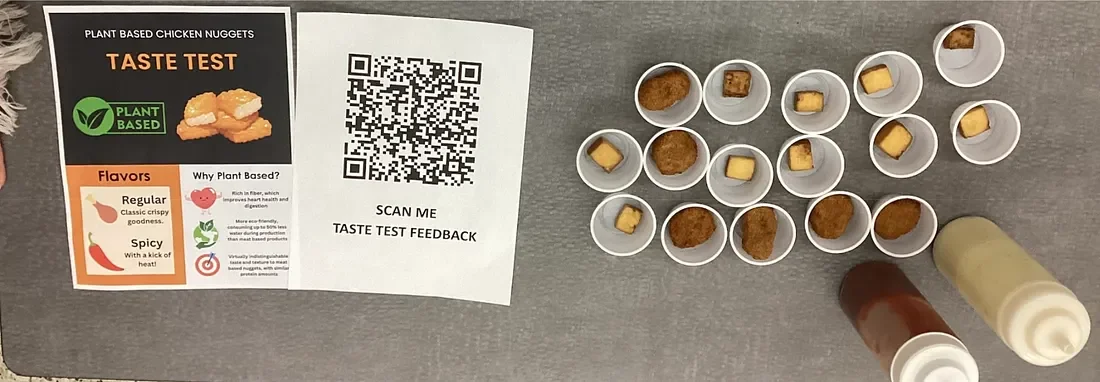
Promotional flyer, digital feedback survey, and plant-based tofu and nugget samples
I stared at the cafeteria line, scanning for something I could eat that both aligned with my Hindu values and didn’t upset my lactose intolerant stomach. Most days, my only option was the weekly salad — adequate in isolation but not enough to feel like my choices mattered on a day to day basis.
Beyond personal frustration, there are compelling reasons to expand plant-based options. For example, one comparative study of burgers found that, for a similar-size patty, a beef burger used about 21 times more water and had a carbon footprint 13 times higher than a fully plant-based burger[1]. Plant-based foods are also rich in fiber, which supports digestion and reduces the risk of cardiovascular disease[2]. The combination of environmental benefits, health advantages, and inclusivity for nearly all dietary needs inspired me to take action in my school.
Over the course of the school year, I worked to show how students can drive real, lasting change by partnering with their food service team to promote and expand access to the plant-based meal options they deserve…